
First Steps Towards Human-Elephant Coexistence in Babile Elephant Sanctuary
Babile Elephant Sanctuary in eastern Ethiopia is a highly contested protected landscape; people and elephants have long competed for land both within and around the sanctuary. Rangers must contend with communities that have settled in its principal fertile valley, while elephants sometimes move beyond the sanctuary boundary in search of food, especially during the dry season. For nearby communities, this can mean damaged crops, sleepless nights, and safety concerns.
To help reduce tensions in and around Babile, Ethiopian Wildlife Conservation Authority (EWCA) has deployed equipment and conducted practical training, focusing on safe, non-lethal ways to manage human-elephant conflict. The goal was to empower rangers to implement solutions that would protect people and their livelihoods while keeping elephants safe.

The activity brought together 16 rangers from the most conflict-prone outposts around the Babile Elephant Sanctuary. These rangers are often the first responders when elephants move into community areas, especially at night, so we designed a one-day, hands-on training programme to strengthen their confidence and skills.
The training emphasised real-life situations. Rangers took part in group discussions, role-play, and field simulations in areas where conflict regularly occurs. Topics included ‘Why Conflicts Happen’, ‘How Elephant Behaviour Changes With the Seasons’, and ‘Why Rushed or Aggressive Reactions Can Make Situations Worse’. We also demonstrated non-lethal deterrents (tools that scare elephants away without causing harm).
Simple Tools, Big Impact
Rangers were trained in the safe and coordinated use of:
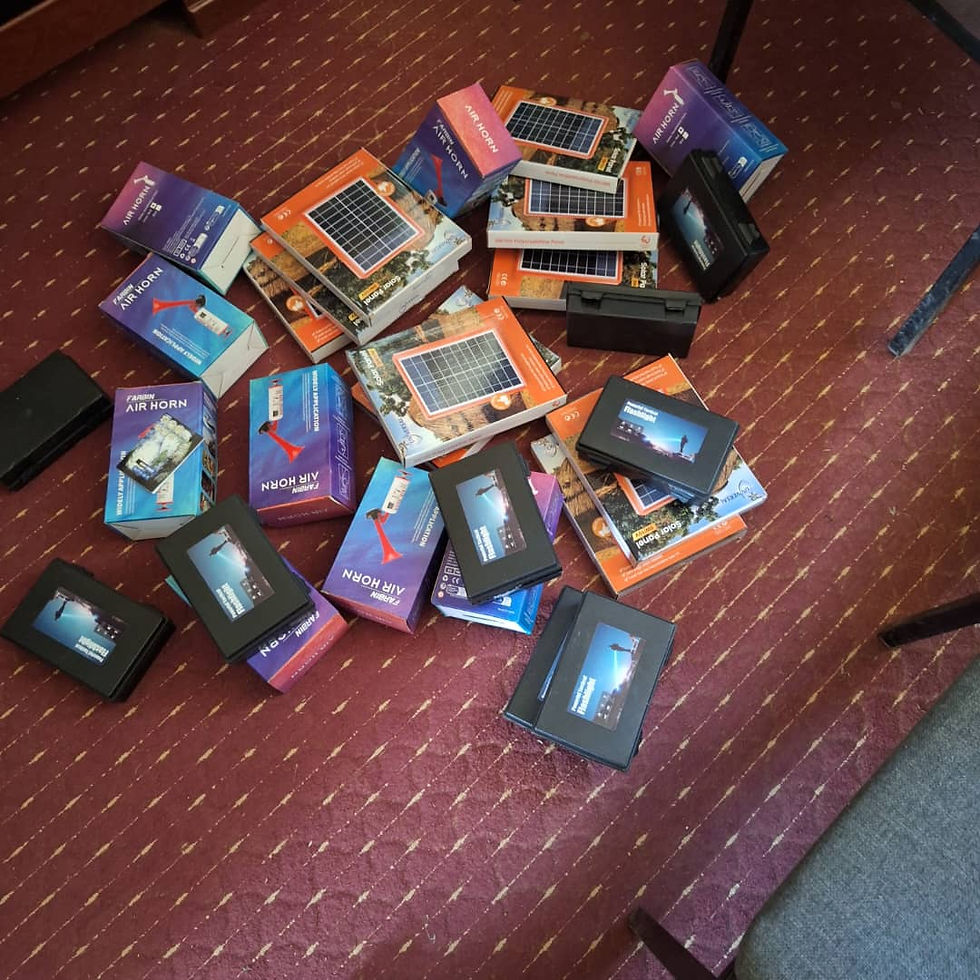
High-powered LED torches with a strobe function, which are effective for safety and night-time deterrence.
Air horns, used strategically to discourage elephants.
Solar panels, ensuring equipment can be charged and ready when needed
Just as important as learning how to use the tools was understanding when not to use them. Rangers discussed personal safety, how to avoid escalating encounters, and when to step back and call for additional support. At the end of the training, equipment was distributed to three key outposts: Midega, Alola, and Akdora, based on conflict levels and operational needs. Each recipient signed an accountability agreement, reinforcing responsible use and reporting.
A Step Toward Coexistence
This activity may have been short, but its impact is meaningful in the long term. Rangers are now better prepared to respond to human-elephant conflict in ways that protect people, wildlife, and property. The use of ethical, non-lethal deterrents helps reduce immediate risks while supporting long-term conservation goals.
As we look ahead, we must continue to monitor, offer refresher training and expand similar efforts to other high-conflict areas, so we can sustain the gains we have made. Sometimes, coexistence starts with something as simple as a torch, a horn, and the knowledge of how to use them wisely.


Comments